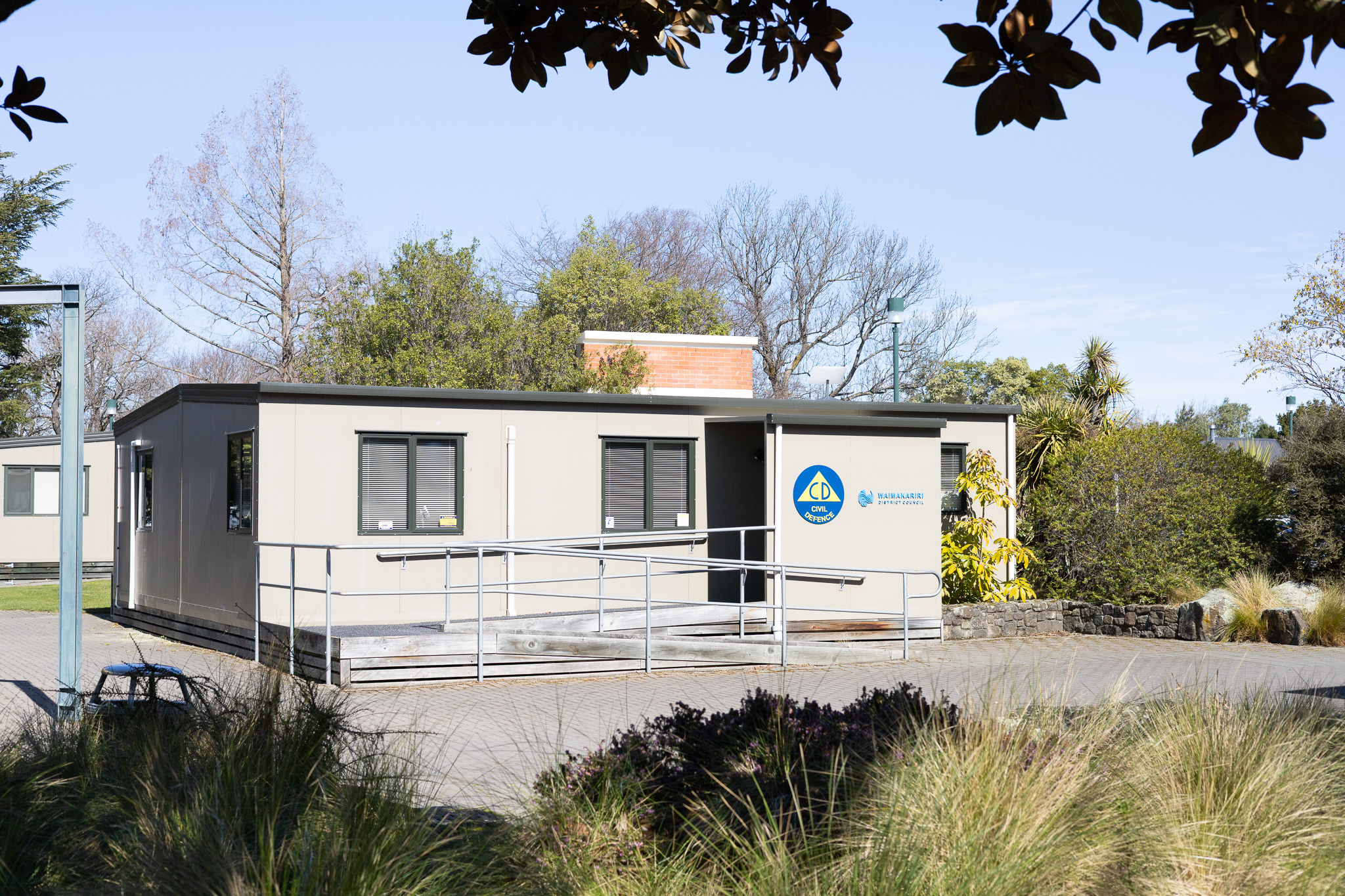
Civil Defence in Waimakariri is managed by the Council.
We are a part of the wider Canterbury Civil Defence Emergency Management Group and have a statutory obligation pursuant to the Civil Defence and Emergency Management Act 2002 to plan and prepare for civil emergencies, such as a severe weather event or earthquake.
We work closely with local emergency services, Mainpower, other utility providers, and government agencies to support all stages of emergency management in Waimakariri — reduction, readiness, response and recovery.
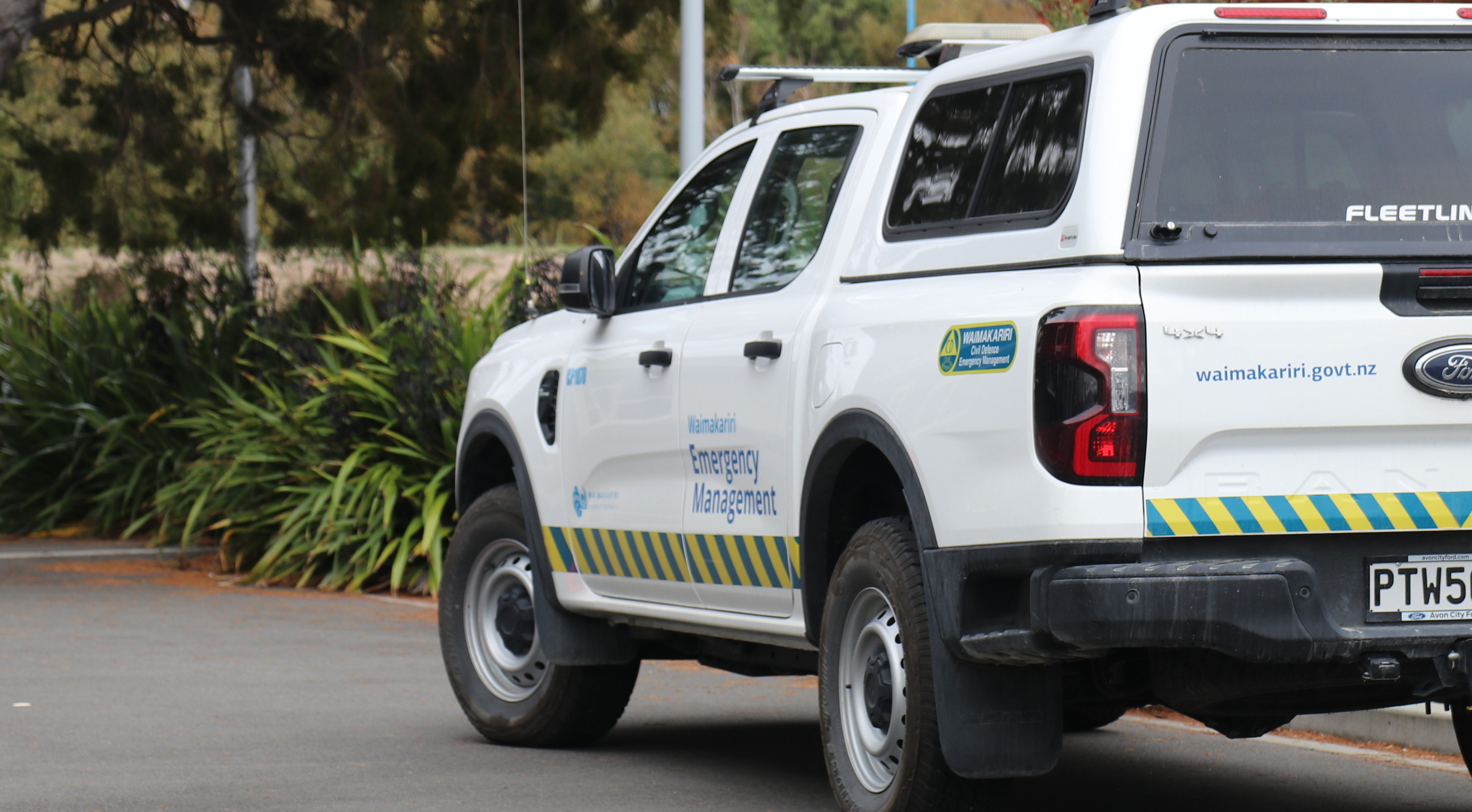
Waimakariri Emergency Management Office
We have a small team of staff who lead and support all Civil Defence and Emergency Management initiatives in Waimakariri.
Training of Council staff
Our Emergency Management team makes sure systems are in place for our staff to feel capable and confident when responding to a civil defence emergency. Staff undergo regular training and practice scenario-based exercises with other councils in Canterbury.
Training of volunteers
Council's Emergency Management team is responsible for training and developing the competency of Waimakariri's emergency management volunteers, and connecting them with Community Emergency Hub groups.
Learn more about emergency management volunteers.
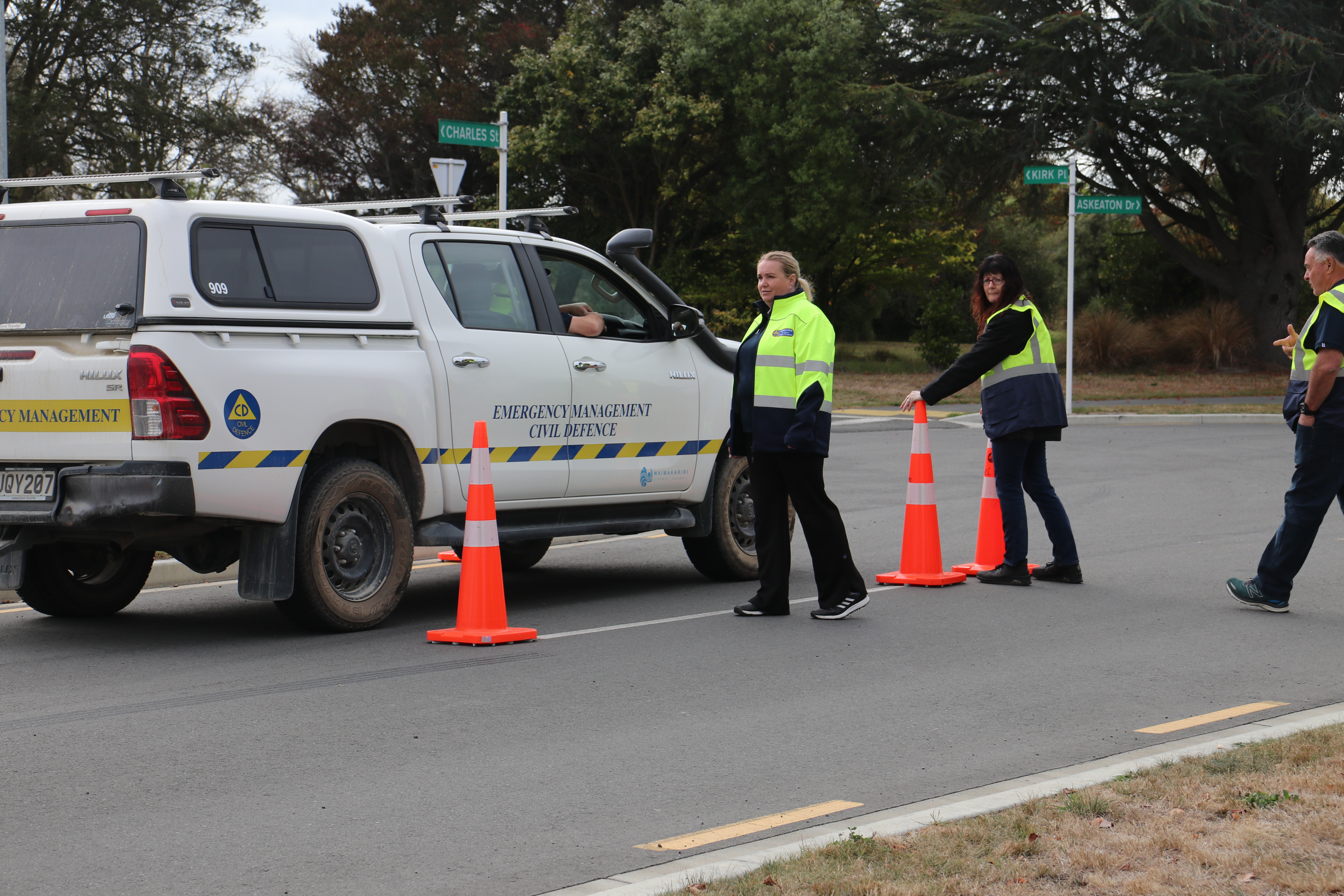
During an emergency, we use a range of systems to protect property and life.
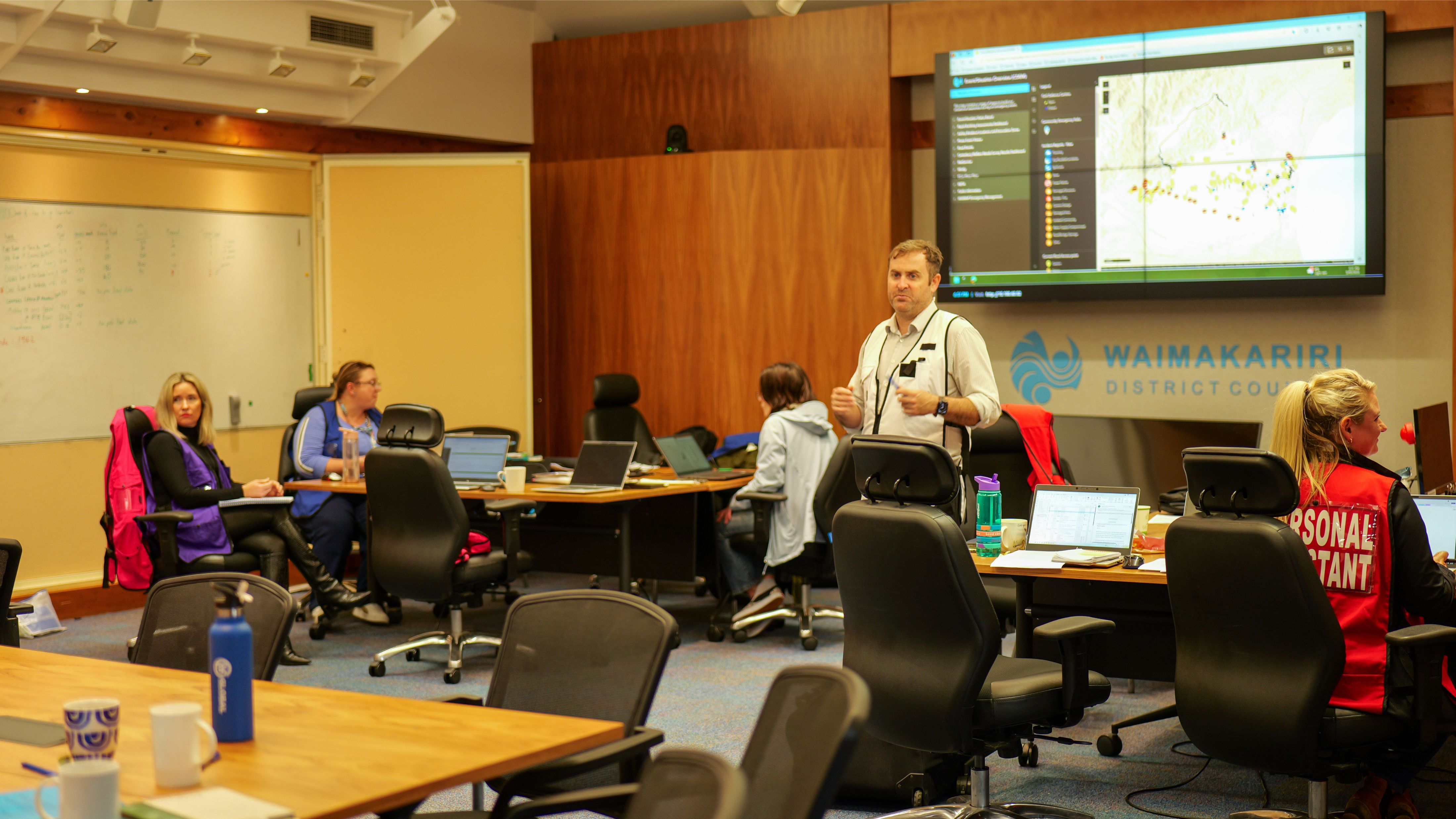
During a civil defence emergency (e.g. a flood, tsunami or earthquake), the Council will set up an Emergency Operations Centre (EOC). This is a place where our staff can work together and with other agencies to collect and analyse data, make decisions that protect life and property, and communicate with involved agencies and with our residents.
For large-scale events, our EOC will be set up in the Council Chambers, at the Rangiora service centre.
Within the EOC, we have dedicated Council staff performing different functions, like Logistics, Welfare, Safety, Intelligence and Public Information Management. These staff are on a 24-hour roster, 365 days a year.
These teams are led by the Local Controller, who oversees the response to the emergency. They are also responsible for keeping the Canterbury Civil Defence Emergency Management Group updated on progress and developments happening in the Waimakariri District.
The EOC may also include representatives from emergency services like the New Zealand Police and utility providers such as Mainpower.
During an emergency, the Council can open Civil Defence Centres (also called Welfare Centres) to provide a shelter for displaced people. These are managed by trained emergency management volunteers and staff.
They are a warm, dry place during evacuations and provide food, drinking water, blankets and basic bedding as well as first aid and wellbeing support.
They are only activated when needed and the Council will communicate with residents when one is opened.
Locations of Civil Defence Centres
Council will share relevant warnings and alerts on our website and Facebook page. For specific watches, warnings and alerts visit the relevant agency's website:
- Fire and Emergency New Zealand: Wildfire warnings
- Health New Zealand: Extreme Hot Weather and Public Health Alerts
- MetService: Severe weather watches and warnings
- Environment Canterbury: River health warnings
- GNS Science: Seismic activity warnings
- GNS Science: Tsunami warnings
- MainPower: Power supply warnings and outages
Emergency Mobile Alerts
If there is a serious threat to life, health or property, the Council is authorised to send an emergency mobile alert (EMA). Emergency Mobile Alerts keep people safe.
They are broadcast to all capable phones from targeted cell towers to areas affected by serious hazards. You may not receive an alert if you are out of mobile coverage, mobile phone towers are damaged, or there is a power outage.
Visit the Get Ready website to learn more about Emergency Mobile Alerts.
Coastal warning sirens
There are three siren locations in the Waimakariri District, they are stationed in the coastal communities at:
- The Pines Beach/Kairaki
- Woodend Beach
- Waikuku Beach
If you hear the coastal warning sirens, comply with any of its voice messages and follow instructions regarding evacuation of your area.
In some tsunami scenarios there won’t be sufficient time to activate the sirens.
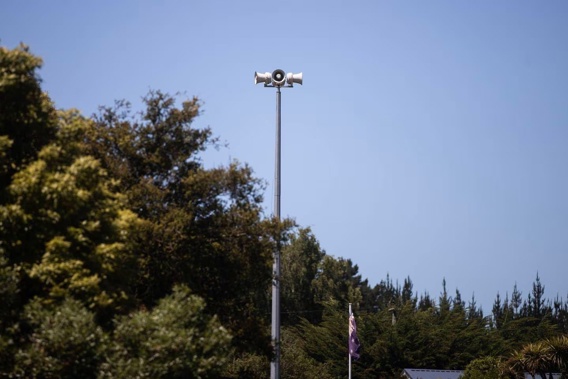
A tsunami warning siren at Waikuku Beach domain
In New Zealand, a state of emergency is a legal tool used to manage serious events that threaten life or property. Both are established under the Civil Defence Emergency Management Act 2002.
State of Local Emergency
A state of local emergency can be declared by the Mayor when an emergency affects only Waimakariri. Once declared, it grants special powers to evacuate people, close roads and public spaces, enter private property and restrict access to dangerous areas.
State of National Emergency
A state of national emergency applies when an emergency is so significant or widespread that it requires central government coordination. It can be declared by the Minister of Civil Defence. All the powers available during a local emergency apply nationally, but with added authority to mobilise national resources and agencies and ensure consistent decision making across the country.
The recovery phase
After a civil defence emergency, the Council helps lead the recovery for our communities once it is safe to do so.
We work closely with our partners, including Environment Canterbury, emergency services, iwi, community organisations, lifeline utilities and central government to coordinate recovery activities and support the move from response to recovery. Our role includes restoring council services and infrastructure such as local roads, water and wastewater networks, and public facilities so daily life can begin to return to normal.
Contact us
In a Civil Defence emergency, you can contact us on 0800 WMK GOV (0800 965 468). If there is an immediate risk to life, call the emergency services on 111.
For non-emergencies: you can contact our Waimakariri Emergency Management team via:
- Email: civildefence2@wmk.govt.nz
- Phone: 03 266 9138