About the Reforms
The coalition Government is making large scale changes to local government - the biggest shakeup in a generation. This is likely to change what functions and services we offer in the coming years, as well as how much we charge.
Legislation changes include the Resource Management Act, changes to the role and shape of regional councils, the Building Act, Emergency Management system, development levies, and regulation around rates capping and how this is applied.
These reforms all interact, and we will work carefully to understand any potential impacts on our community in terms of service provision as well as cost.
Reform is far from something councils wish to avoid – in fact the sector has been calling for this for years. We look forward to working collaboratively with central government on these changes.
This is an exciting opportunity to improve how local government delivers planning, infrastructure, environmental management and public services to support our districts future prosperity.
Although we agree at a high level on change being required, we are wary some of the proposals may not be in the best interests of our community and will be responding with our thoughts on changes which we do not see as benefiting Waimakariri.
For Waimakariri, key areas of reform that will affect our District include:



Timeline
2026
- Early 2026 — Consultation opens on rates capping, development levies, and local government structure changes
- 20 February 2026 — Submission deadline (last day for feedback on development levies and simplifying local government proposals)
- March 2026 — Government decisions expected on local government structure
- May 2026 — Head Start pathway announced. Council's have 3 months to submit regional reorganisation plans. If councils choose not to use the Head Start pathway, or aren’t ready to, the Government will step in to ensure reform still happens through a backstop process.
- Mid-2026 — Legislation introduced/passed/progressed: Rates capping, development levies, local government changes; RMA reform bills progressed toward enactment
- Late 2026 — RMA transition begins after Bill passes.
2027
- Implementation begins — Councils start transition to new RMA system; rates capping transition starts (effective 1 January); building reforms roll out
- Simplifying Local Government reforms enacted — Combined Territories Boards (CTBs) established.
- Between 2027 and 2029 Regional Reorganisation Plans developed — CTBs have two years to develop and submit plans.
- Simplifying Local Government — Final decisions are expected in 2027, with changes implemented ahead of the 2028 local elections.
2028
- Simplifying Local Government — Final decisions are expected in 2027, with changes implemented ahead of the 2028 local elections.
- Development levies charging begins — Councils adopt new policies and start charging levies.
2029
- Mid-2029 — Full rates capping regulatory framework operational (system fully in place).
- RMA fully implemented.
What Matters to Waimakariri
Our Council sees these reforms as an exciting opportunity to update the local government system to be more efficient and reflective of the needs of our communities.
As always, our focus is on the needs of Waimakariri and making sure local voices are heard and understood by decision makers.
These proposed reforms look likely to significantly change the function and shape of local government and service provision.
However, what they don’t address is how any new responsibilities will be funded.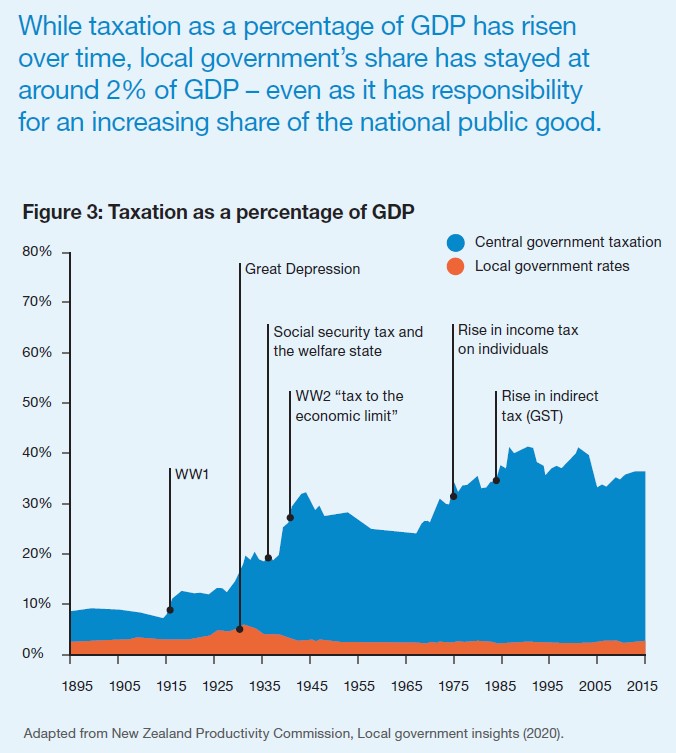
The reality is that most local government income comes from rates. Any reform needs to also provide new funding avenues from central Government to address New Zealand’s national infrastructure deficit and more fairly spread the tax take across communities.
Over the years, successive government reports have confirmed that local government funding and financing needs changes made. It simply is not sustainable to rely on rates alone.
Local government has been pushing for new tools such as the Crown paying rates for the services they use, as well as the GST charged on rates being returned to councils.
These alone would provide a huge relief to ratepayers while allowing districts to thrive. The only requirement being that central Government pay for the services they use – just like households.
The Government has committed to other new tools, including city and regional deals, GST sharing on new housing, and a Regional Infrastructure Fund.
However, we are yet to see how these could or will be applied to our District and what it will mean for ratepayers.
With such large scale reform our concern is that any proposals could come at the expense of local accountability. One thing Council is certain of, and we have seen it with Three Waters reform, is that our communities are well informed.
Whatever changes come about, maintaining that connection, accessibility, and accountability to our communities must remain paramount and this will be a big theme in our submission to government and when we lobby for improvements to the draft legislation.
More information / Resources:
Simpson Grierson News and Insights section
RMA reform:
- https://environment.govt.nz/what-government-is-doing/areas-of-work/resource-management/resource-management-system-reform/
- https://environment.govt.nz/acts-and-regulations/acts/natural-and-built-environment-act-and-spatial-planning-act/
Rates capping / Simplifying Local Government:
- https://www.dia.govt.nz/Local-Government-Policy
- https://www.dia.govt.nz/Local-Government-Review
- Review into the Future for Local Government 2023
- NZ Productivity Commission - Local Government Insights 2020
- LGNZ Simplifying Local Government Process
- Simpson Grierson: Proposed Regional Governance overhaul – implications and opportunities
Development Levies:
Local Government New Zealand explainers:
- Emergency Management Explainer
- Rates Target Model Explainer
- Resource Management Reform Explainer
- Building System Explainer
- Simplifying Local Government Process
- Funding and Financing Explainer