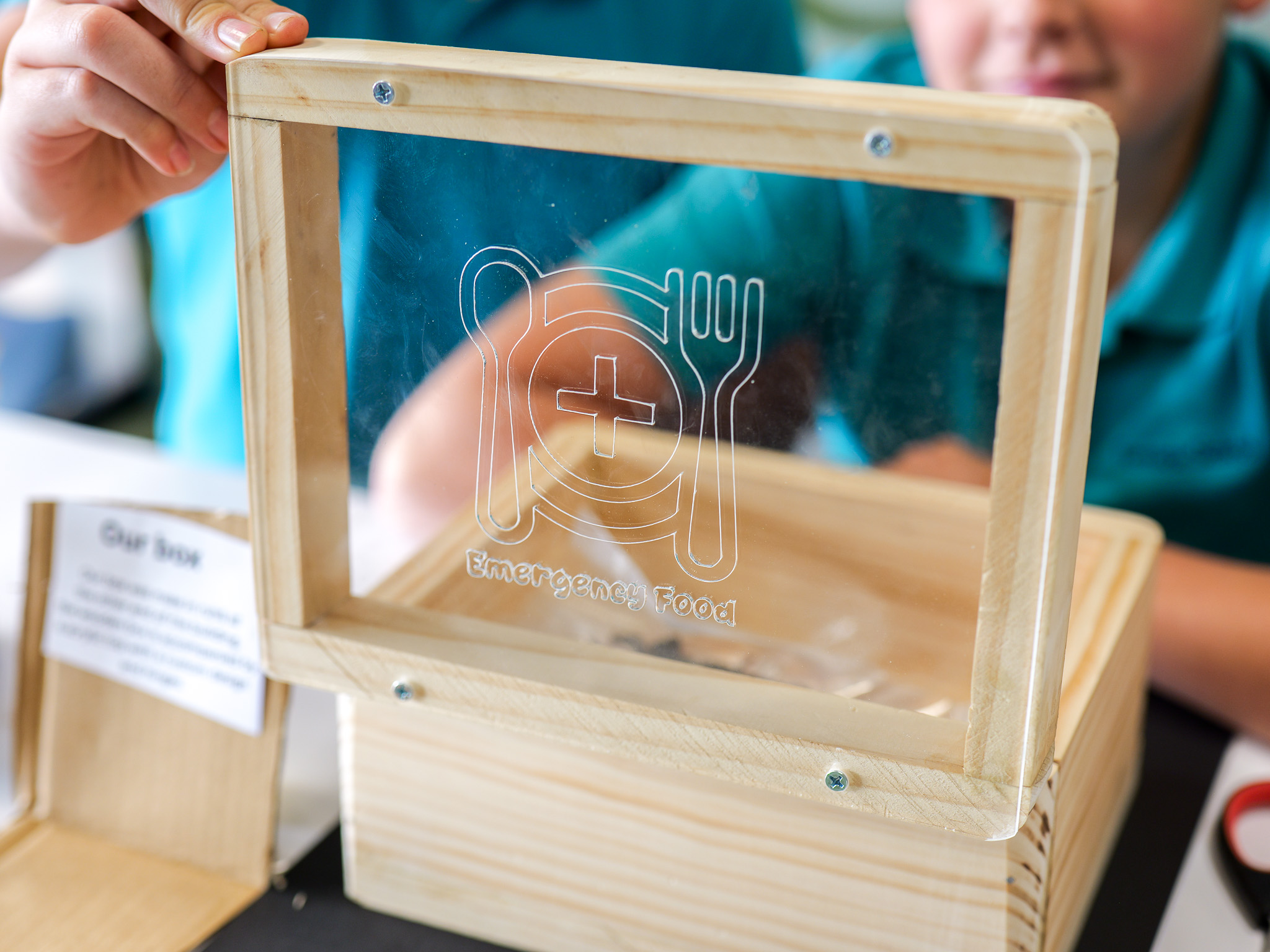
North Canterbury’s young innovators have been designing smart solutions to support their communities in civil defence emergencies.
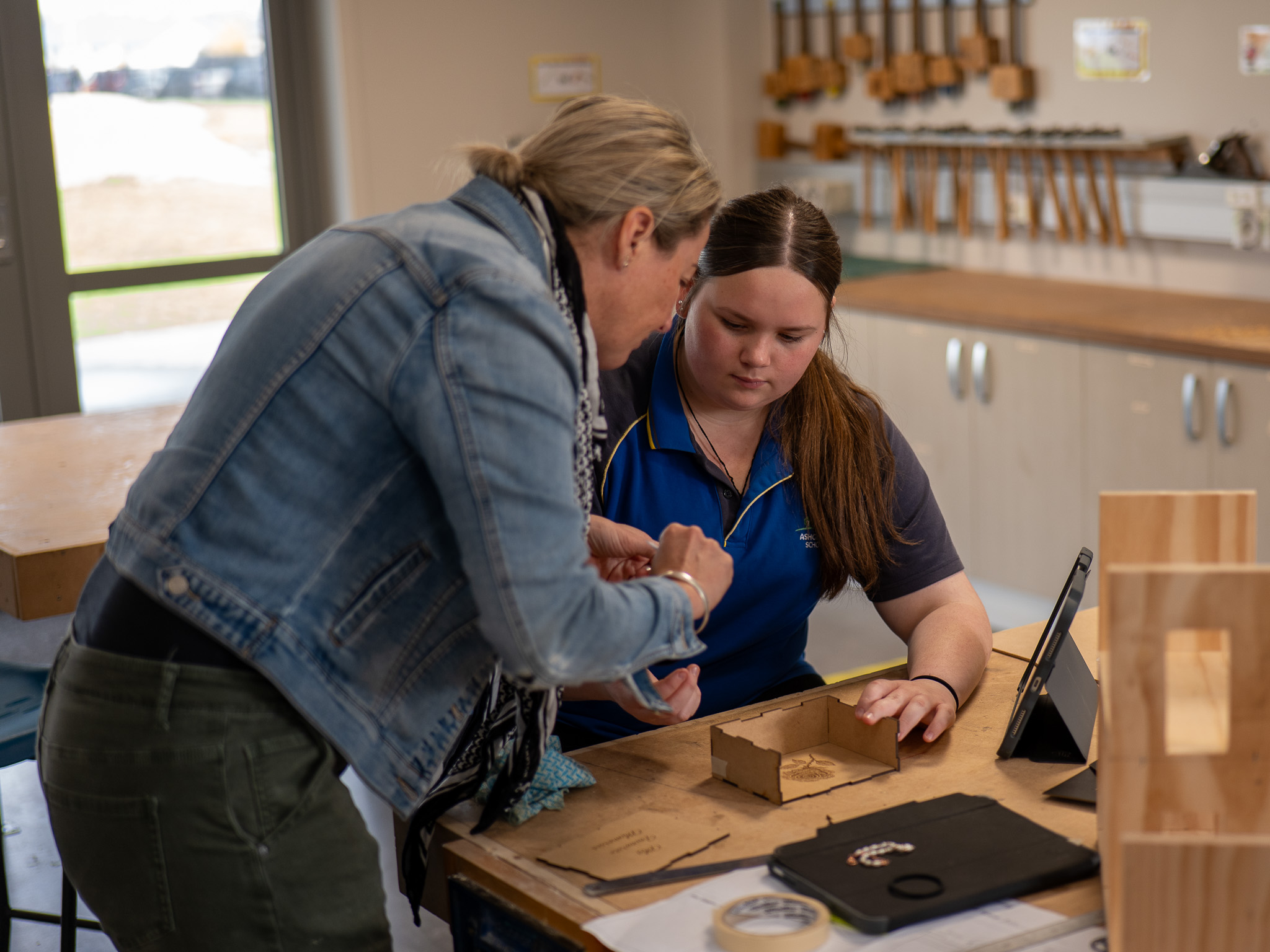
Would you reach for dehydrated sushi if you had to evacuate during an emergency? What about homemade sunscreen or wooden toys to keep the kids calm?
This term, 170 intermediate students from five schools have been tackling a real-world challenge at the Maukatere Technology Centre at Te Matauru Primary: design a project that supports one of the four ‘R’s of emergency management – reduction, readiness, response or recovery.
 Students from Te Matauru, Ashgrove, Fernside, St Joseph’s, and Amberley schools have been hands-on with a variety of cutting-edge technologies – from food science and textiles to hard materials, electronics and robotics.
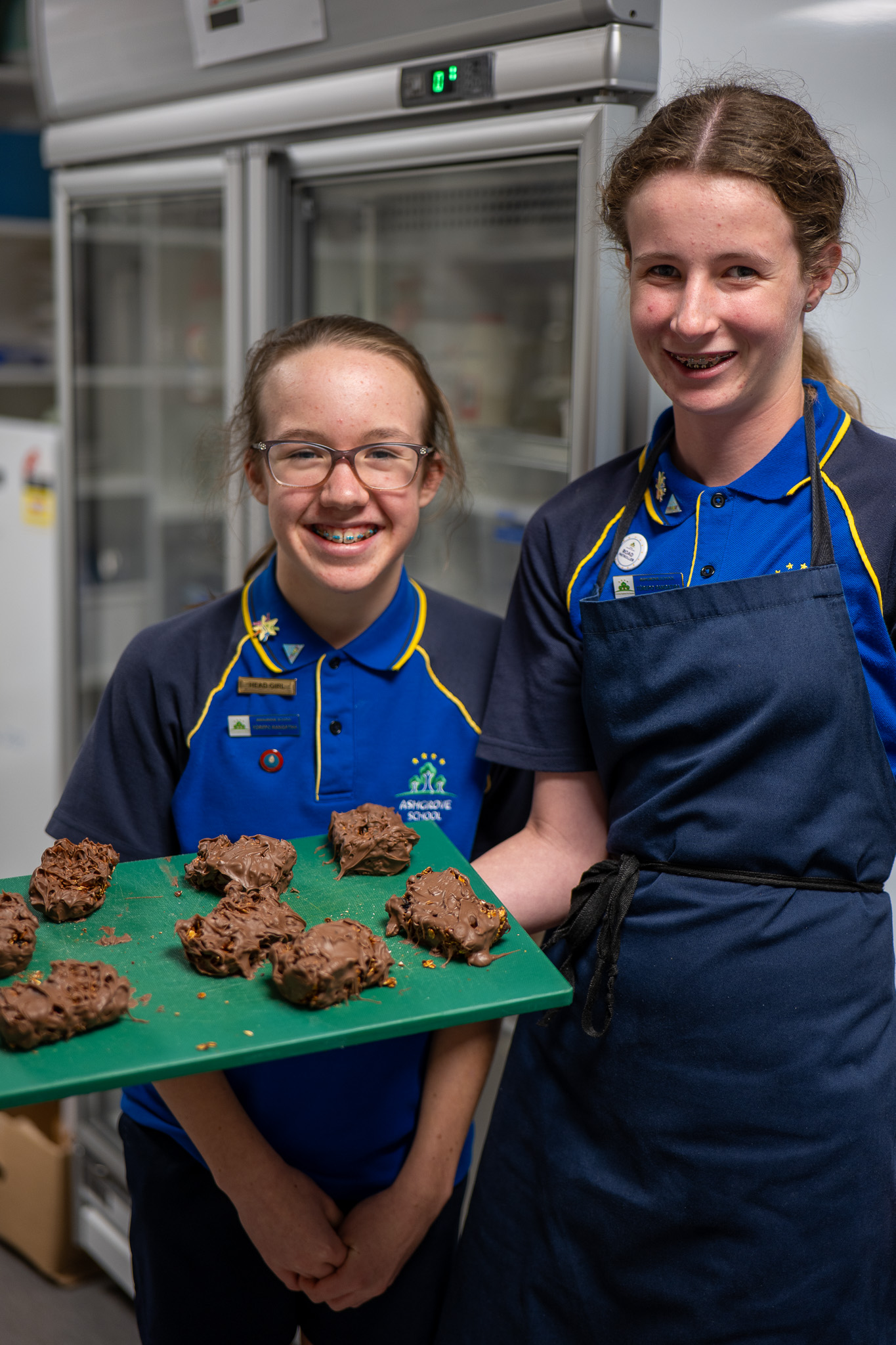
Ashgrove School head girl Matilda Parish was especially excited to take on a project centred around emergency preparedness, a topic that’s always intrigued her.
“Emergencies have always fascinated me,” she says. “One of the first books I read was about the Titanic, and I absolutely loved it.”
For the project, Matilda joined forces with her friend Aimee Dunlop to create a practical yet comforting emergency kit. Their kit included a handmade drawstring bag, a custom wooden tray, and a selection of edible treats: Anzac biscuits, hot chocolate puffs, and chocolate-dipped muesli bars.
“It’s all about comfort food,” Matilda explains. “We even designed our wooden tray with indents for plates and cups, so they won’t slide around just in case there’s an earthquake.”
Despite the wide range of tools and technologies available at the Maukatare Centre, Matilda says there’s one element that stands out for her.
“My favourite part is the cooking,” she says with a smile. “Because I get to eat it!”
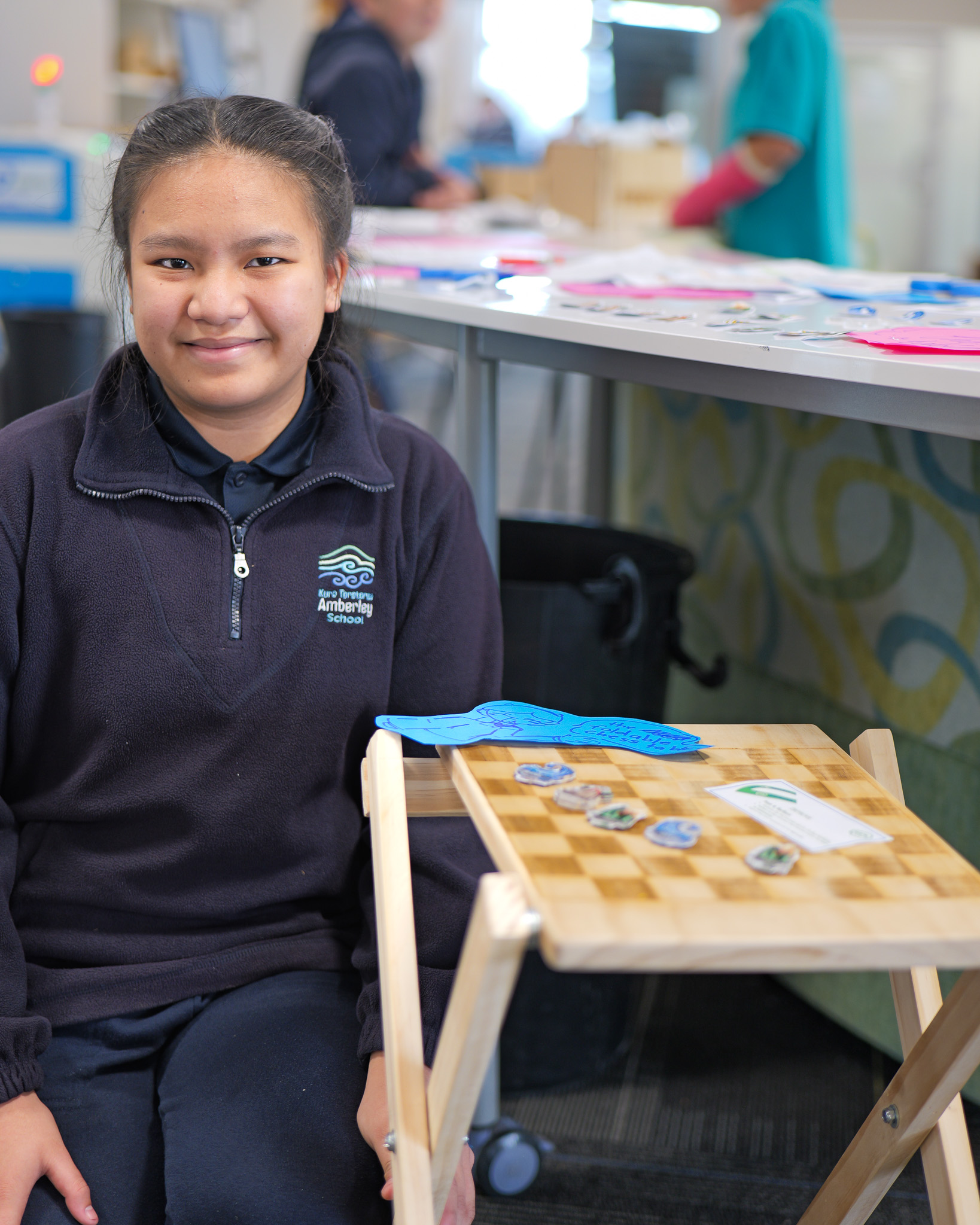 Maukatere Centre Lead Jen Hodgkinson said her team was impressed by the range and creativity of student projects developed through the design thinking process.
“We had students fully engage with this project – many working at home and involving their whānau. It was also the first time that students had done a deep dive into digital content and AI.”
Jen highlighted one group that developed Trusty Kev, a chatbot they designed, animated, and trained to provide accurate information.
Another standout was a student who created an interactive map of significant civil defence and welfare sites around Waimakariri, then laser-cut a QR code linking to the map onto keytags.
The idea for the project was sparked when Waimakariri District Council’s Civil Defence Emergency Management Advisor, Dean Eades, visited Te Matauru Primary School to talk with staff about establishing the school as a community emergency hub – a place where people can go to support each other during a major emergency.
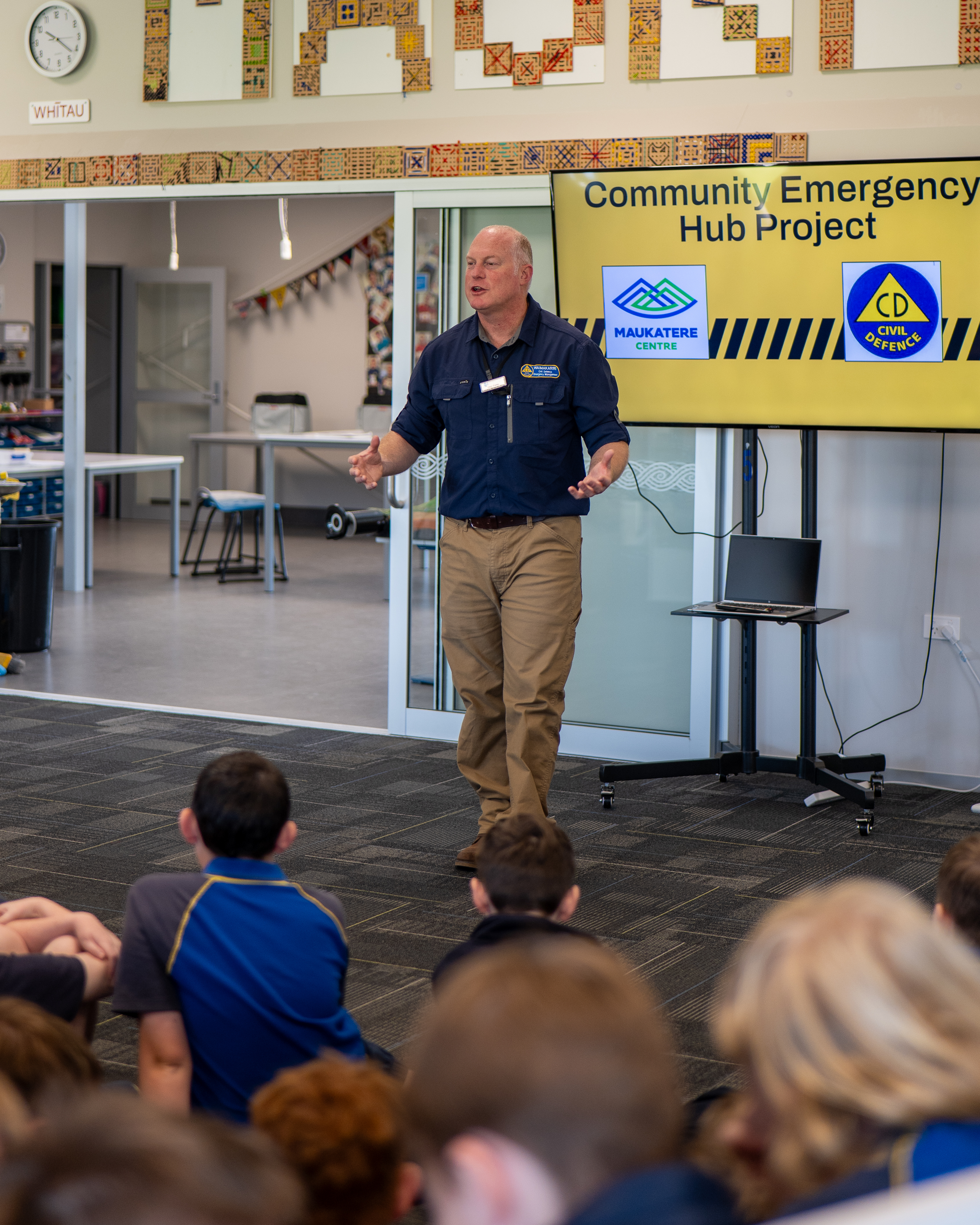 That conversation quickly grew into something more.
Dean returned on the first day of the project to brief students on the types of emergencies Waimakariri communities may face – from floods and fires to earthquakes and tsunamis.
He says he was impressed by the depth and originality of the ideas that students came up with.
“Readiness, response, recovery, and reduction of emergency management are key to the wider community in understanding their own local hazards and being better prepared for what comes next.
“Understanding the four ‘R’s – readiness, response, recovery and reduction – is key to building resilient communities,” Dean says.
“Collaborating with schools like this helps build that understanding early, giving young people the knowledge and tools to respond to hazards that are unique to North Canterbury.”